Customers who come back after up to nine years count as returning, and search forgives typos
adtribute now reads your orders and spend nine years back instead of five, so a customer whose earlier order is five to nine years old counts as returning. Search in every picker finds what you mean when you swap words, make a typo or type an umlaut without its dots.
Changed
- Before, adtribute read your orders, leads and other events, and your channel spend, from the last five years, so a customer whose earlier order was more than five years old counted as a new customer. Now, adtribute reads nine years back, and a customer whose earlier order is five to nine years old counts as returning. If your data goes back more than five years, some revenue and orders move from new to returning customers. What to do: nothing. From: 29 October 2026, also for earlier dates.
- Before, adtribute read planned spend and targets up to five years ahead, and events without a limit. Now, it reads spend, targets and events up to 15 months ahead. A planned cost or target dated further ahead shows once it is within 15 months. What to do: nothing. From: 29 October 2026.
New
Performance Max by asset group
Google Ads Performance Max spend and clicks can now be broken down by asset group, at the level where other campaigns show their ad groups. Ask us to turn it on for your Google Ads connection first, then add &adb_asset_group_id={assetgroupid} to your Google Ads tracking template, so that visits from Performance Max clicks match their asset group. New Google Ads connections have it from the start and only need the parameter. Google gives asset groups by day only, so a Performance Max campaign has no hourly breakdown once its asset group data is in. The tracking template: Google Ads.
Improvements
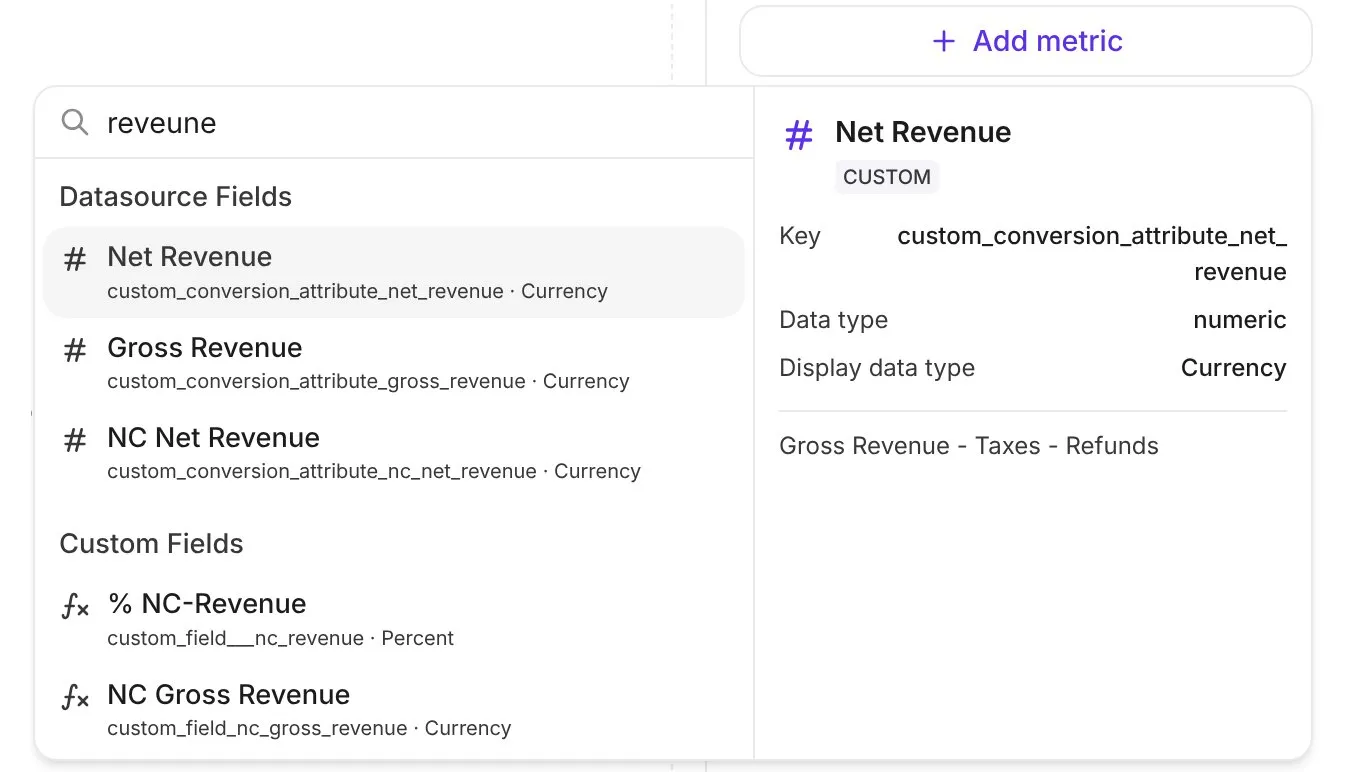
- App: search in every picker finds what you mean when you swap its words (“revenue net”), make one typo in a word of five letters or more (“reveune”), or type an umlaut without its dots or as ae, oe or ue (“gebuhr”, “gebuehr”).
- Definitions: the settings on the page of an attribute, event, field or attribution model work as soon as the page shows. Before, they stayed disabled for about a second.
- Meta Ads Chrome Extension: Help & Tips opens the extension’s article in these docs: Meta Ads Chrome Extension.